




★★★★★
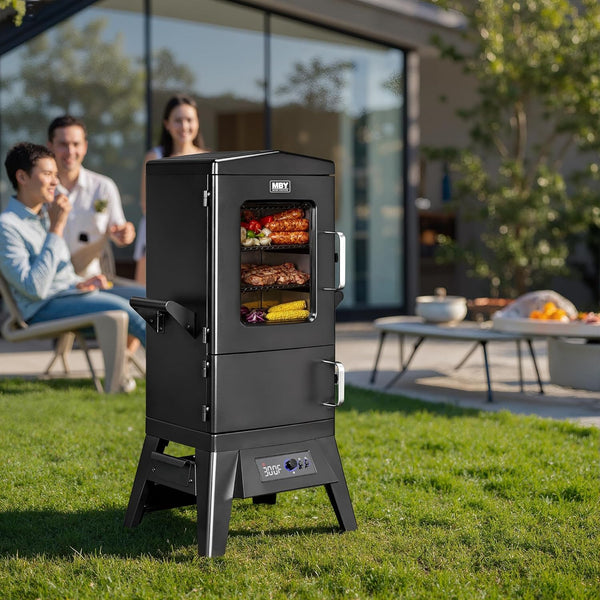
“I've been wanting a smoker for a long time and finally pulled the trigger on this one. It's nice and heavy. Feels solidly built. Nice smoke quality.”
CalebVerified customerLarge Vertical Electric Smoker
Heavy-gauge steel built for heat, weather, and equipment that earns a permanent spot outside.


No patio sets match these filters.
Steel is the material you choose when you want mass. It is stronger than aluminum at the same thickness, it costs less, and it stays where you put it. The trade-off is honest and worth stating plainly: steel contains iron, so unlike aluminum it can rust if the coating is breached and left that way.
Anything that needs to be heavy or take heat. Fire pit bodies, grill and smoker cabinets, and kennel panels are all better in steel, because weight is a feature and because steel tolerates direct heat that would be a problem elsewhere. A smoker cabinet in aluminum would be worse, not better.
Seating you move, and anything that lives permanently in weather without a cover. Aluminum outdoor furniture cannot rust at all, and it is light enough for one person to rearrange. That is why our conversation sets are aluminum-framed and our smokers are steel. The material follows the job rather than a house preference.
Rust on outdoor steel almost always starts at a chip, a scratch, or a weld point where the coating is thinnest. Two habits prevent most of it. Cover the item between uses, and let it dry before you do, because a sealed cover over a damp surface traps moisture and causes exactly what the cover was meant to prevent. If you find a chip, touch it up rather than waiting, since bare steel spreads corrosion under the surrounding coating.
For steel-bodied cooking equipment specifically, see outdoor cooking. For the material comparison in full, our outdoor furniture buying guide covers how frame material affects lifespan.
Aluminum cannot rust and is light enough to move alone. Powder-coated steel is heavier and stiffer, so it stays put in wind and carries heat well, which is why smokers, grills, and fire pit tables use it.
The powder coat seals the steel against moisture. Rust only becomes a risk where the finish is chipped or scratched through, so touch up damage and keep equipment covered when it is not in use.
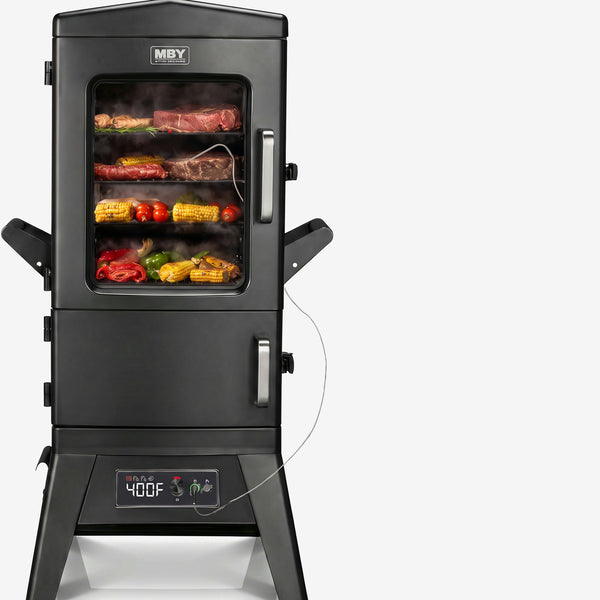
Steel holds its shape under repeated heating and cooling instead of warping, and its weight keeps a tall vertical smoker or loaded grill cart stable on a patio.
Every piece passes the MBY All-Weather Test, a five-point durability check covering frame material, cushion fill and fabric, fastener spec, weight rating, and weather exposure before it is listed.
Verified reviews from customers who bought these products on our other sales channels.
“I've been wanting a smoker for a long time and finally pulled the trigger on this one. It's nice and heavy. Feels solidly built. Nice smoke quality.”
CalebVerified customerLarge Vertical Electric Smoker“Love this grill. I had to contact the seller due to not having a thermostat, they responded quickly and got it in the mail.”
John FieldsVerified customer4-Burner Propane Gas Grill with Side Burner“Very good smoker. Easy assembly.”
menlo parkVerified customerLarge Vertical Electric Smoker“This is great nice and specious can hold everything I need it for”
ReddsVerified customerLarge Vertical Electric Smoker“I love this smoker. Works really good.”
Tamica WoodsonVerified customerVertical Propane Smoker“Easy to set up and great smoker”
Carol AckleyVerified customerVertical Propane Smoker“What I really liked was that the sellers stood by their product and helped me when I messed up... After running it for it's initial burn, I smoked some chicken thighs and they were absolutely great.”
mike perryVerified customerVertical Electric Pellet Smoker“Love it can't wait to smoke the turkey for Thanksgiving”
Dawn FanningVerified customerVertical Electric Pellet Smoker“Very happy with my purchase”
Stacey MillerVerified customerVertical Electric Pellet Smoker“The directions need improvement. However, the smoker works great. A cooking chart would help.”
KATHRYNVerified customerVertical Electric Pellet SmokerEnd of Summer Sale
You have claimed your $30 discount. We will apply it automatically at checkout, on orders of $150 or more, through September 15.