A backyard patio is the one outdoor space with room to make mistakes. There is usually enough square footage that the question is not what fits, but how to divide it, so it does not end up as one ring of chairs facing nothing in particular.
Think in zones, not in furniture
Most working backyards split into three: somewhere to sit, somewhere to eat, and somewhere the cooking happens. They do not all need to be large, and they should not all be in a row. Seating wants a focal point, which is usually a fire, a view, or the house itself. Dining wants to be within easy carrying distance of the kitchen door. Cooking wants to be near the dining zone but not directly upwind of the seating, which is the mistake people notice only after the first cookout.
How much seating is enough?
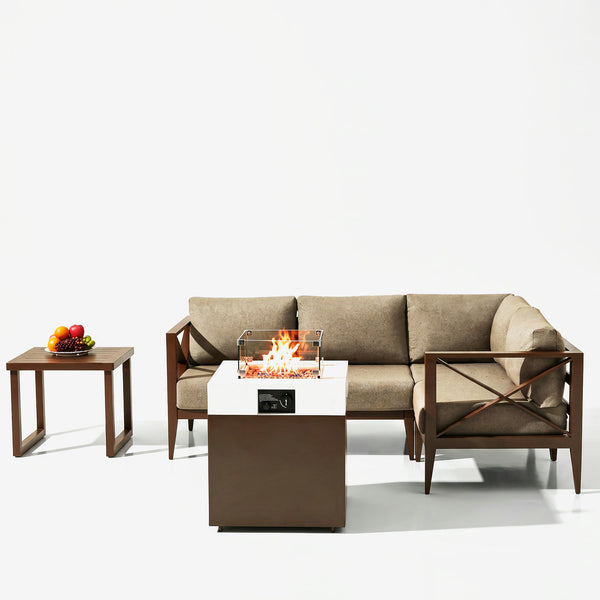
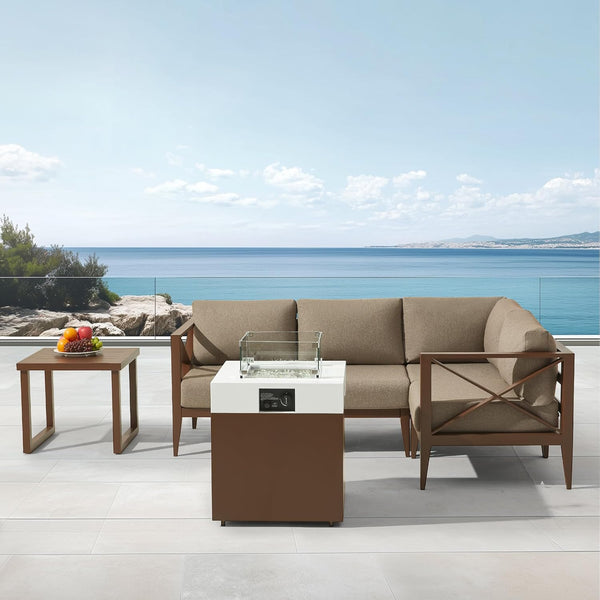
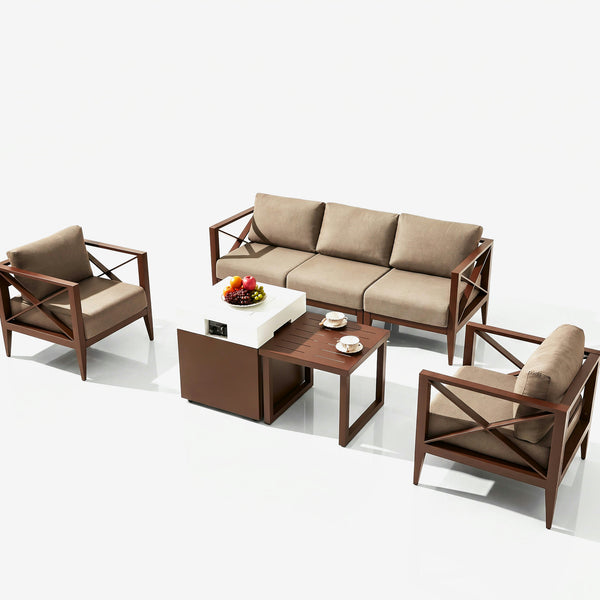
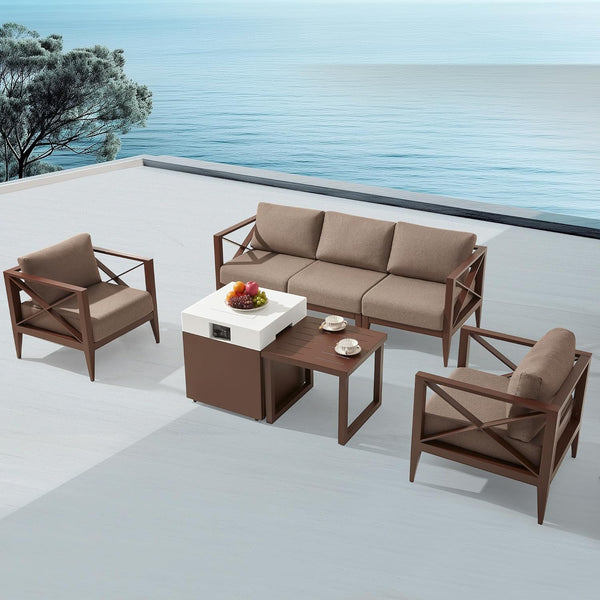
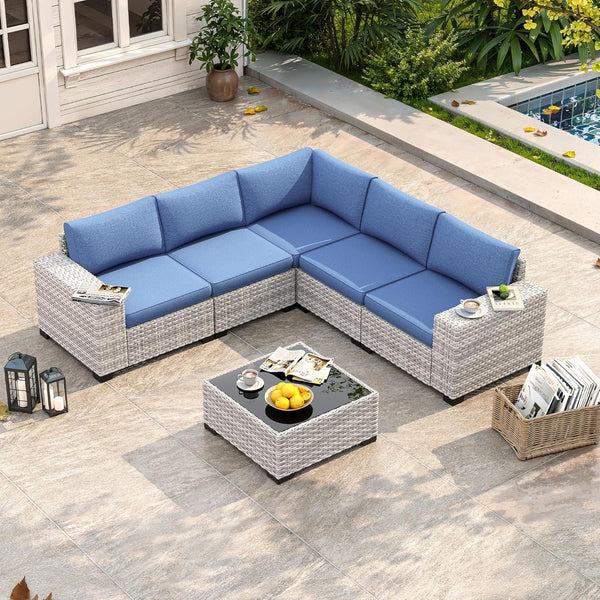
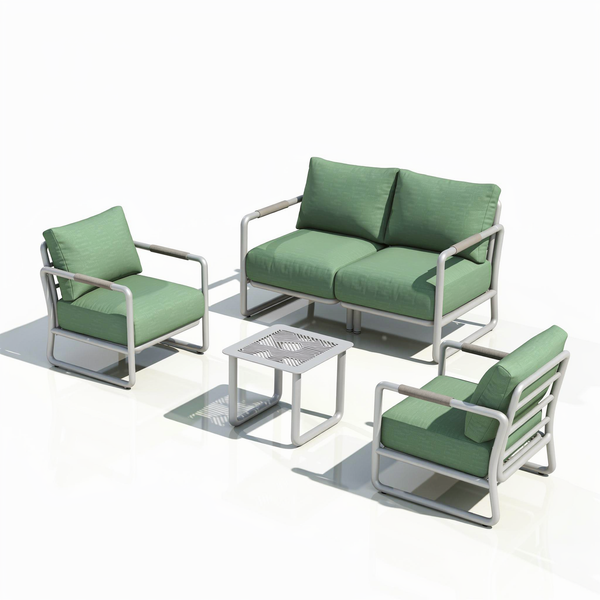
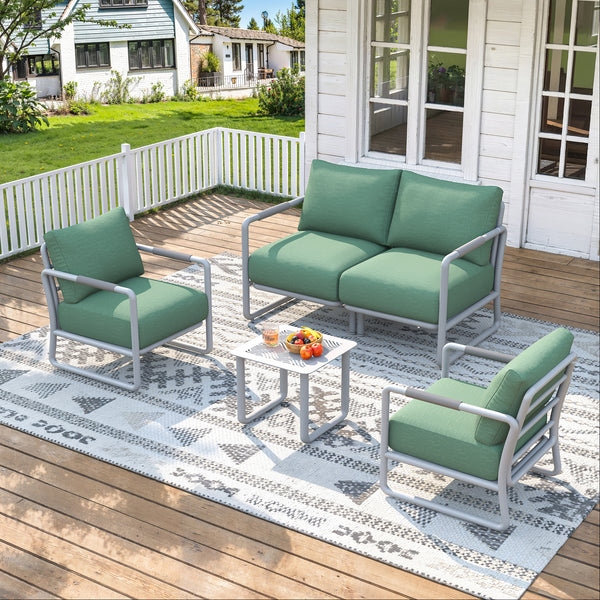
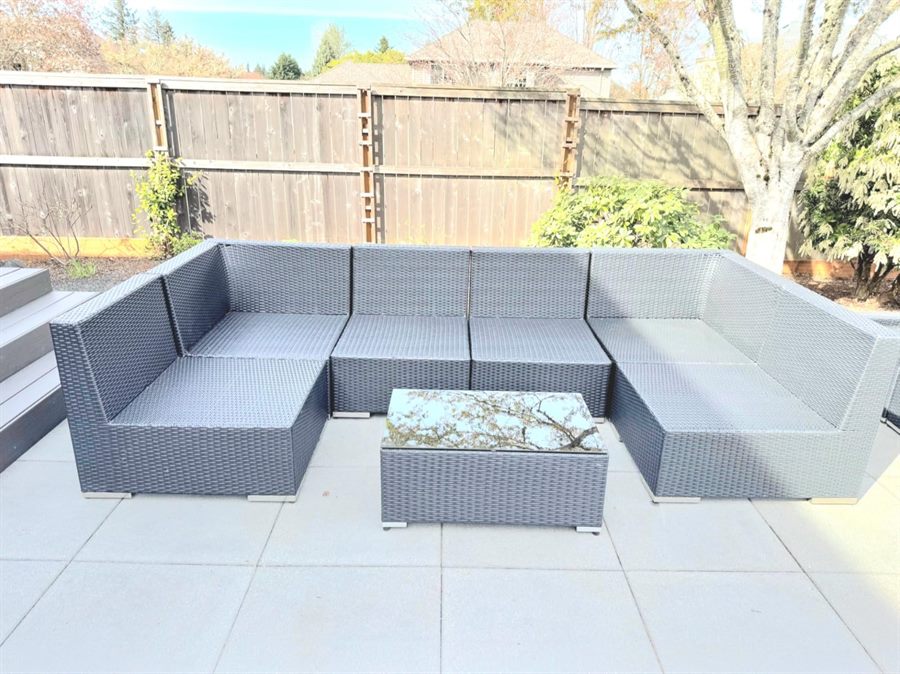
Count the people who are actually there most weeks, then add two. Sets scaled for a party you host twice a year spend the other fifty weeks making the space feel empty. A four to five seat group suits most backyards. Go larger only if you genuinely entertain, in which case a sectional gives more seats per square foot than the same number of separate chairs.
Fire as the anchor
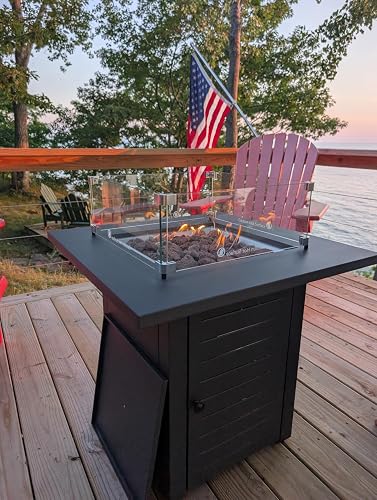
A fire pit table does two jobs in a backyard: it gives the seating something to face, and it extends the season by a month or two at each end. Models with a lid work as a normal table when the flame is off, which matters more than it sounds if the patio is your only outdoor surface. How to choose a fire pit set covers sizing and BTU.
What survives being left out
Backyard furniture generally stays outside all season, so the frame and the fasteners matter more here than anywhere else. Powder-coated aluminum will not rust, and stainless hardware will not stain the frame that cannot rust. Cushion fabric is the part that fades first regardless, so plan to bring cushions in over winter.
Related
Browse full conversation sets, outdoor dining and cooking, or start from the outdoor furniture buying guide.