




★★★★★
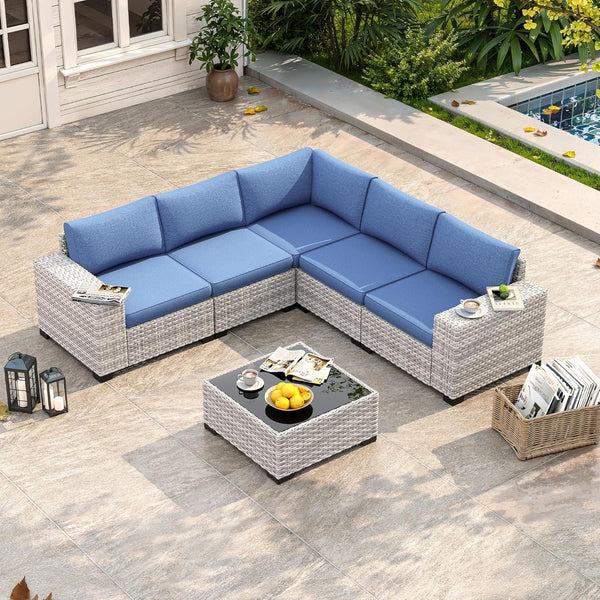
“The set is beautiful and the exact size we needed for our outdoor patio. It is very comfortable! It took us about 4 hours to assemble all 13 pieces.”
Dish44Verified customer13-Piece Wicker Conversation Set
Hand-woven all-weather wicker that softens a space and holds up to full sun and rain.
Outdoor wicker is not the natural wicker that lives on a sunporch and falls apart in rain. It is PE rattan, a synthetic strand woven over a frame, and the point of it is that it looks woven while behaving like plastic in weather. These sets pair that weave with steel frames and thick cushions.
Natural rattan is a palm stem. It splits, fades and eventually rots when it gets rained on, which is why genuine rattan furniture belongs indoors or under cover. PE rattan is polyethylene extruded into strands and woven the same way. It does not absorb water, does not rot, and holds colour far longer under UV. The look is close enough that most people cannot tell from a few feet away, and the behaviour outdoors is completely different.
The honest split is weight and warmth. Wicker sets are heavier, because the weave sits over a steel frame, so they hold position better on an exposed patio and feel more substantial to sit in. Aluminum sets are lighter, genuinely rust-proof, and easy for one person to rearrange. If your space is windy or you never move furniture, wicker. If you rearrange often or you are on a balcony, aluminum. Our aluminum versus wicker guide works through it properly.
Look at where the weave terminates. Cheap sets leave strand ends tucked rather than fixed, and those are the first thing to work loose. Ask what the frame underneath is, because the weave is not structural and a steel frame with a compromised coating can rust even though the rattan never will. And check whether cushion covers unzip, since on a wicker set the cushions are doing most of the comfort work and will need washing.
Several of these configure with a propane fire pit table. For the full range of seating groups in both materials, see patio conversation sets.
Yes. All-weather PE rattan is woven over a rust-resistant steel frame and made for full outdoor exposure. Unlike natural wicker, it does not dry out, crack, or mildew in normal use.
Natural wicker is plant fiber and belongs indoors or under cover. PE rattan is a synthetic weave engineered for weather, so it keeps the same woven look without absorbing water or splintering outdoors.
Brush loose debris from the weave, then wash with mild soapy water and rinse. A soft brush reaches between strands; let the set dry fully before putting cushions back on.
Every piece passes the MBY All-Weather Test, a five-point durability check covering frame material, cushion fill and fabric, fastener spec, weight rating, and weather exposure before it is listed.
Verified reviews from customers who bought these products on our other sales channels.
“The set is beautiful and the exact size we needed for our outdoor patio. It is very comfortable! It took us about 4 hours to assemble all 13 pieces.”
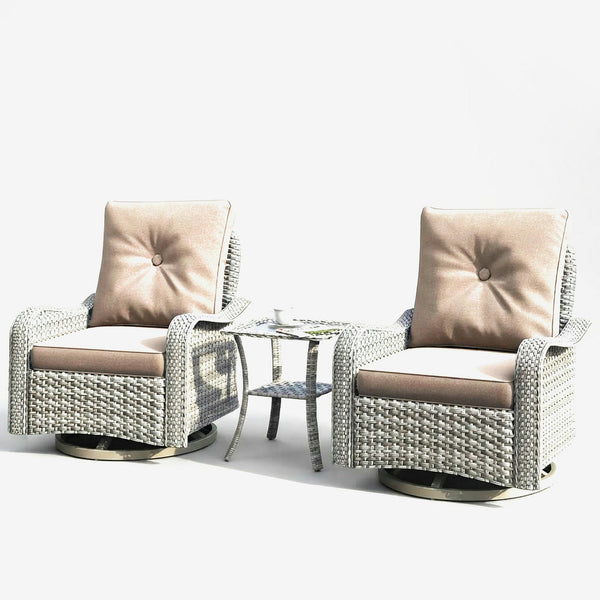
Dish44Verified customer13-Piece Wicker Conversation Set“The chairs are incredibly comfortable; the 4″ cushions are thick and supportive, not the cheap thin ones you see on cheaper sets.”
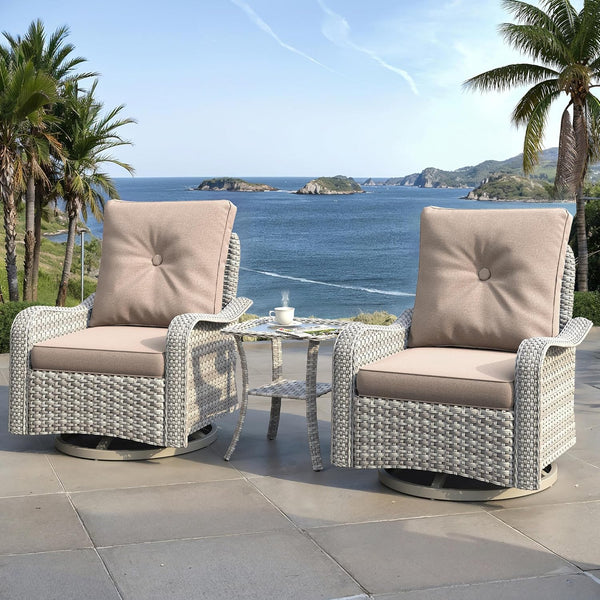
ReningVerified customer3-Piece Wicker Swivel Rocker Set“The PE rattan looks great and feels durable. The frame feels solid and well-made... The swivel rocking motion makes these chairs much nicer than regular patio chairs.”
YvonneVerified customer3-Piece Wicker Swivel Rocker Set“We put this set on our back deck and it instantly became my favorite spot... the gentle rocking motion is perfect for morning coffee or evening wind-down time.”
BOPESTERVerified customer3-Piece Wicker Swivel Rocker Set“This 6 piece sectional set is amazing, especially for the price... seems very sturdy and well-made.”
Bolormaa GansukhVerified customer6-Seat Wicker Patio Set with Fire Pit Table“Pleased with the quality and sitting it was nice. Overall, I recommend it just have some patience when you're putting it together.”
AnthonyVerified customer3-Piece Wicker Swivel Rocker SetEnd of Summer Sale
You have claimed your $30 discount. We will apply it automatically at checkout, on orders of $150 or more, through September 15.