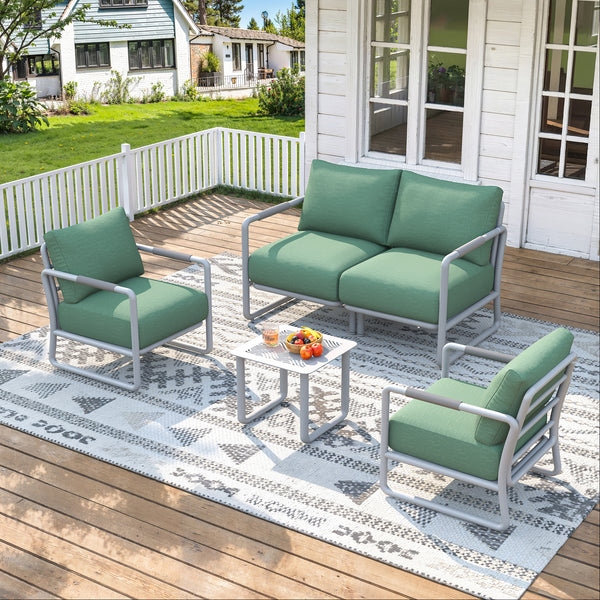
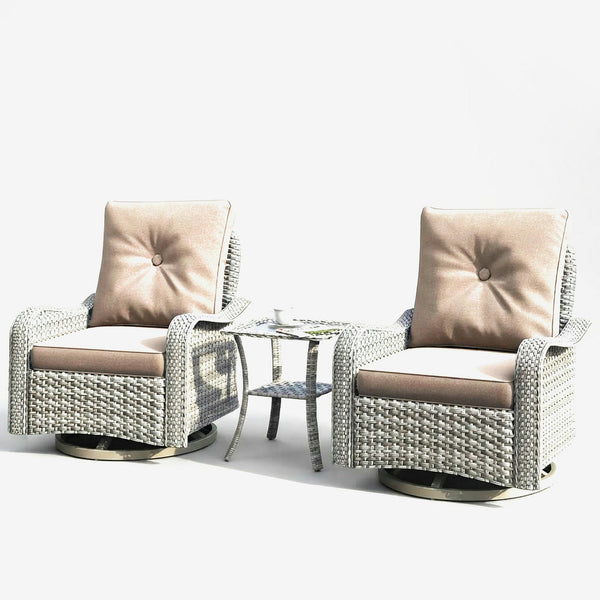
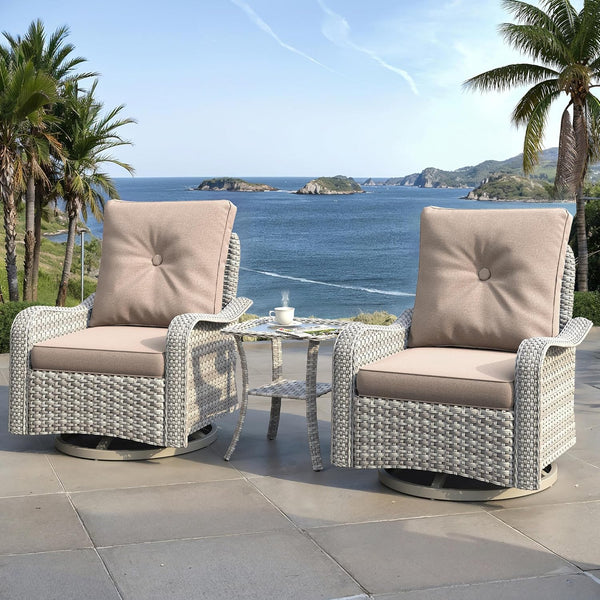
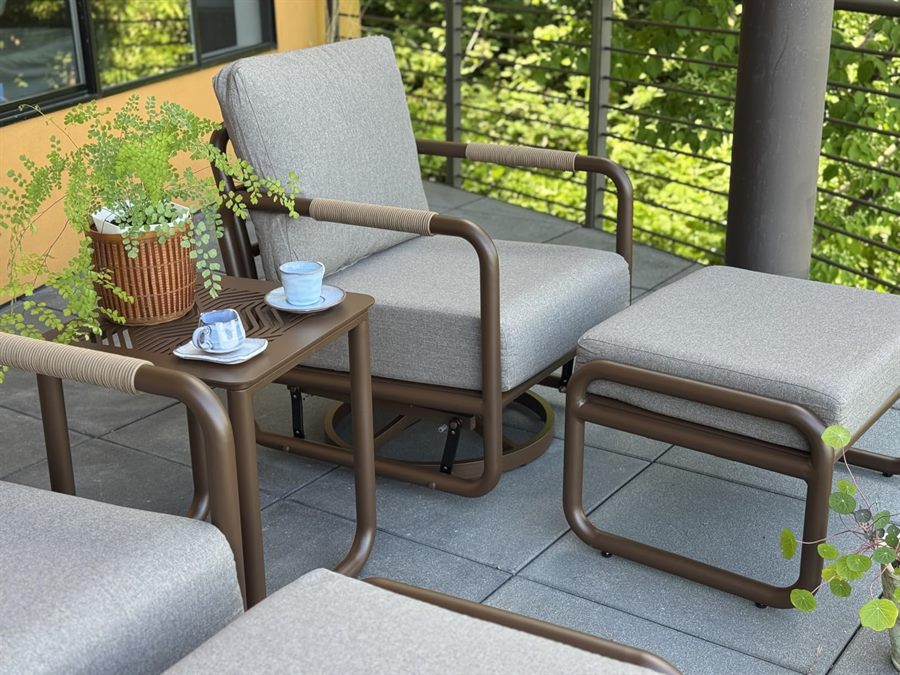
Garden seating is different from patio seating in one practical way: it usually sits on ground that is not flat. Grass, gravel, settled pavers and packed soil all move over a season, and furniture that was level in May is rocking by August.
Uneven ground is the real problem
This is what levelling feet are for, and it is worth checking a listing states they are adjustable rather than fixed. On grass and gravel, wide feet also matter, because narrow legs sink and a chair that has sunk unevenly is a chair nobody sits in twice. If the ground is very soft, a pair of pavers under the front legs does more than any amount of adjustment.
Furniture you will move
Garden seating gets repositioned more than any other kind, chasing shade in summer and sun in spring, or getting out of the way when you are actually gardening. That argues strongly for light frames. Aluminum at 8 to 15 pounds a chair is a genuinely different experience from cast at 20 to 30, and you will feel the difference the first time you move a whole group to mow.
Sun, shade and fading
A seat placed for afternoon sun is a seat whose cushions fade fastest. Olefin and solution-dyed acrylic hold colour considerably longer than plain polyester, which is the single spec worth paying attention to if the seating lives in open sun. Bringing cushions in over winter roughly doubles their usable life regardless of fabric.
Related
For seating around a fire, see fire pit tables and sets. For individual chairs rather than groups, patio chairs and loungers. Material trade-offs are covered in the outdoor furniture buying guide.